Showing posts with label slow. Show all posts

Saturday, 26 May 2012

Standard Time

http://www.vvork.com/wp-content/uploads/2008/08/101.jpg 

The image above is of a piece of work called Standard Time by Mark Formanek (in collaboration with Datenstrudel)

A quote taken from the Standard Time site:

„Standard Time is a performance lasting exactly 24 hours and recorded on film. However, this film is much more than just the recording of an action, the recording of something that has taken place in the past; it is also a clock. A clock for use right now and in the future which, as each day goes by, extends further into the past, but is still up-to-date and punctual”.
Mark Formanek


Monday, 25 July 2011

Tuesday, 19 July 2011

Matthew Harris

Lantern Cloth No. I  Image taken from Matthew Harris's site
 Matthew Harris is a textile and paper artist and writer.  His work is inspirational, using dyed and hand stitch cloth for textile based mark making.  

Sunday, 3 July 2011

Slow Fashioned and Tea for Two

http://i17.photobucket.com/albums/b78/straight_in_the_picture_pose/Tea%20For%20Two/outfits/SDC14476-1-1.jpg
Picture is from the Tea For Two blog
This week there is an interview with me on the wonderful Slow Fashioned site AND fashion blogger Kelly-Ann featured my work in her blog , Tea For Two. 

Wednesday, 15 June 2011

Snail Mail Project

This month I am participating in Creative Collective's snail mail project.  I have signed up for a swap to send an exciting creative and/or handmade project to 3 other people in the post this week.

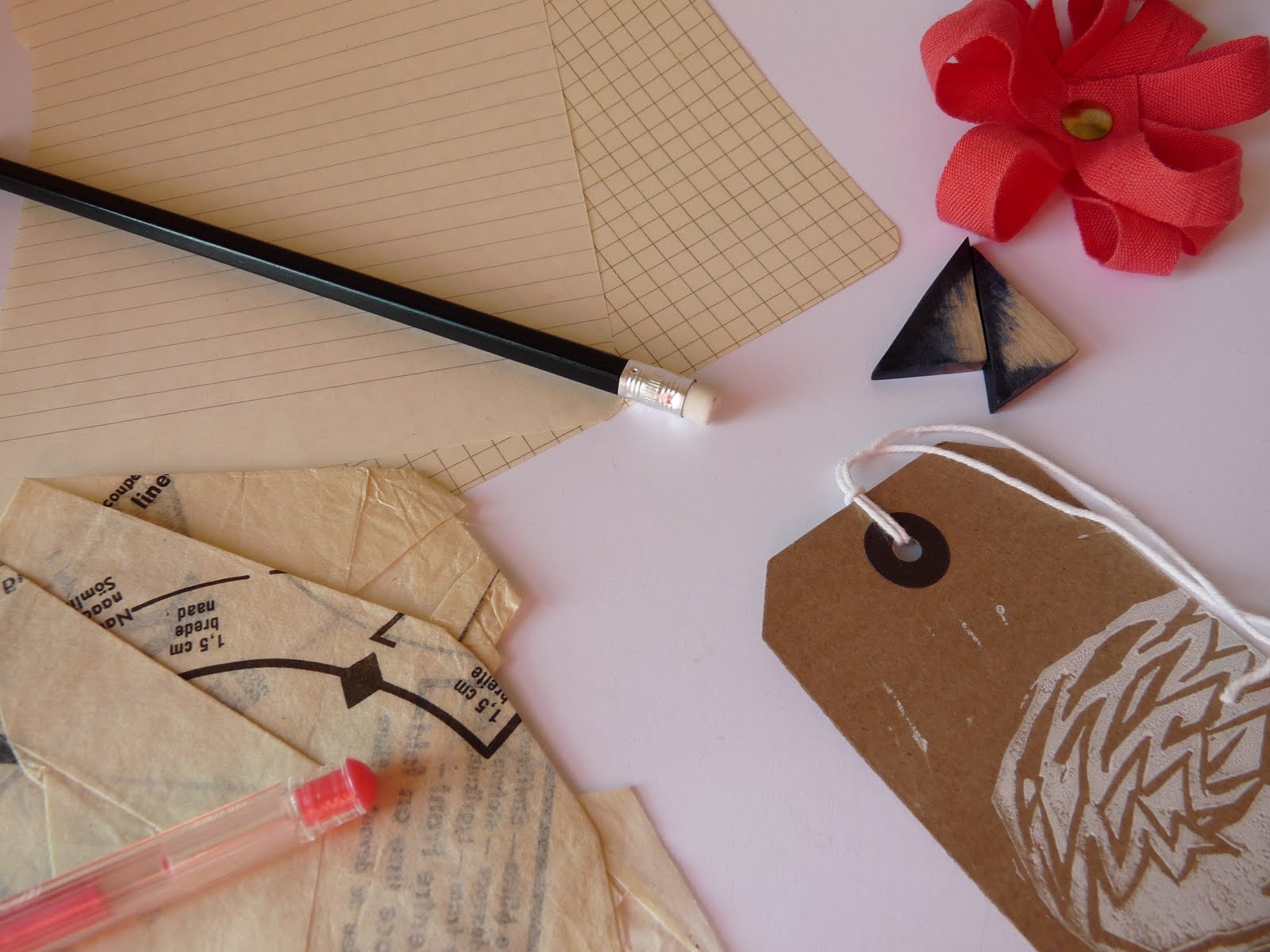
Yesterday I posted this picture on their facebook page as a tibbit of what I might send to my swapsters:

I am thinking that it would be nice to send a combination of made things and things to make with.  

I love getting nice stuff in the post and my excitement about this project was heightened yesterday when I went to the post office to get a parcel that I had not been expecting; needless to say its contents were DULL and I was disappointed.  So I am now extra-super excited about the parcels I may receive in the coming weeks and am hoping that the people getting mine are excited too.

Slow mail = exciting mail for once!

Monday, 28 March 2011

The Time-Eating Clock – a story of invention

 The celebrated time-eating Chronophage clock, designed by Dr John Taylor OBE, will go on display at the Science Museum from Monday 18 April, in The Time-Eating Clock – a story of invention.  It will be displayed alongside an original Harrison clock in an installation designed to give insight into the mind of one of today’s most creative and successful inventors.  Walking atop the 1.5 metre golden face is a large kinetic sculpture of a mythical beast. The creature, an integral part of the mechanics of the clock, appears to devour time -the name Chronophage literally means Time-Eater from the Greek: Chronos (Time) and Phago (I eat). The hour is tolled by the sound of a chain clanking into a small wooden coffin concealed in the back of the clock to remind us that our time on earth is limited.  
(taken from the science museum website, see link)


This sounds so exciting.  Admittedly I am a bit of a time-geek but still!

Guardian article
BBC article

Thursday, 24 March 2011

Monday, 28 February 2011

Slow Down London Slow Club

I have started blogging for Slow London as an online only member of their Slow Club.  I am really excited about being a part of this as Slow living and Slow Design are an important part of my creative practice and of my thought process.

  My first weekly instructions were to take note of my pace and attempt to take a slow walk at some point when I would usually be rushing.  My first post is just up on their site now, here, and my second weeks instructions are to do with technology... I will be writing about that later in the week.

See the Slow Down London site here.

Tuesday, 8 February 2011

Slow Portraiture


I recently had my picture taken by ldste with a pin hole camera.  I love them as pictures as, although they aren't all neat and in focus etc they have a really beautiful feel to them.  As the aperture was open for a fair while for each of these shots I had to be still (not my fortè!) and the camera had to be still, i think this has a lot to do with the lack of focus, also you are guessing, counting, the time to leave the lens open for so a lot of it is pot luck.  Beautiful results though.

Sunday, 30 January 2011

Slow Words

This article from the School of Life is quite interesting.  I am not convinced that the idea of the use of simple words to make a clearer message is a new one, or that describing a pie as a cottage with subsidence is that simple an analogy however words (and the use there of, percieved and actual meaning etc) surrounding Slow interest me as does this idea of using words with a (assumed) Slower feeling.

Wednesday, 24 November 2010

Slow and Me

When I work in my studio or at my desk at home I am constantly worried about not doing enough.  What is enough?  Yet, when I am away from my working stations I cannot stop thinking about my work, and frequently when I am at my desk I find myself in the same position.  I will be working on one thing but quite possibly thinking about another.  Where does this lead?  It means I have a small panic every time I don't have my notebook and pen to hand, it also means I often question my focus.  However it also means I process my thoughts, often repeatedly over much time and during different occasions/experiences.  This in itself is interesting as I wonder what effect the different surroundings I find myself in have on the repetitive thought processes I go through.

Am I rubbing my belly while patting my head?
The question remains - what is enough?


In terms of how I understand Slow and in how it affects me  and my practice I find that without this constant thought and regurgitation/rethinking of ideas I stumble.  If I don't think through something enough I don't find it easy to do/make - and I don't necessary mean physically, I need some kind of spiritual comprehension of what I want from my making/doing to be able to produce anything of any merit (be that merit as felt by me or others).

Tuesday, 23 November 2010

Letter Writing

Personal letter writing is a somewhat nostalgic activity.  Does this matter?
Is it wasteful or experiential, or both?
Paper waste energy and transport waste vs the experience and anticipation of receiving a letter from a loved one - which one matters more?
Is receiving a handwritten letter a Slow experience?
Can an email have the same impact?  Better or worse?
Do emails have less choices? (paper type, pen/pencil, envelopes etc vs font style, size etc)


Monday, 22 November 2010

Helen Carnac; maker and curator; Time, Lines and Processes

Helen Carnac spoke at the Chelsea lecture theatre last week.  She posed a series of questions and statements that, in her thinking about Slow and craft, had occurred to her.  She stressed that she didn't necessarily have answers to them but riffed somewhat on what they meant to her.  These are the notions that I took from it:
-End products as resting points in process or ideas process
                (This particularly appeals to me as part of my Slow thinking)

- Importance of generating ideas through collaboration and conversation
- Objects: why do we have them, collect them?  Who has them now, who had them before?
- [In her own practice] Mark-making and drawing, scratching away surfaces to find what is below
- Using walking as a form of interaction to create conversation in order to find a common ground or language between makers
- [For her] Slow means looking at one, all or some of the following:  Quality, provenance, lasting value, valuing craft skills
- Possible key words, possible sequence:  Reveal, reflect, engage, participate, evolve.
- Using these words and ideas to interrogate oneself, asking what you are doing and why
- Tempo as an important consideration for oneself and ones work
- Networks and webs.  What do we think of unlikely connections in craft, Slow and thinking?


Then her 'questions'


- "We cannot afford cheap things" - What is cheap?  What if we cannot afford expensive things?
- How do we encounter things locally and globally?  Why do we go elsewhere to do it when everything can be perceived as so accessible online now.
- What is authentic?
- Is there really a sustainable luxury?
- Can we understand what it was to live in another time?  How do we understand it today?  False nostalgia? Fake memories? Imitation communities?

Saturday, 20 November 2010

Slow

Slow means many things. The context that I mainly use it in is as a philosophy which allows one the time, particularly as a designer, to think thoroughly about ones work, about choices that we make regarding materials and processes, and the end results that we aim for. Slow sits on the same philosophical shelf of thought as many other sustainable design theories.

Slow is not necessarily slow in a time sense (items or processes do not need to be long-winded or time consuming) but is more about allowing oneself time, or simply not rushing.

Monday, 27 September 2010

Slow Practices/Processes

Slow processes and what Slow means to me:  A partially finished series of ideas

In my opinion Slow is a thought process or philosophy rather than a time reference – just because a task takes a long time does not mean it is a Slow task.  I feel that Slow can be defined as taking appropriate time compared to our perceived normal 21st century way of living (seen as Fast).  A Slow process to me is one that has been well considered and thus decided upon due to its appropriateness.  This consideration may only need to be undertaken once as the resulting information could be held in mind for future projects, or it may be that the thinking needs to be done every time a process is used.  Slow and working in a Slow manner is about appropriateness, in terms of material choices, process choices and intended outcomes of your processes; in this sense Slow relates to time because, by working within a Slow framework one allows oneself the time to consider the available options, regardless of the scale of operation.

I feel that the following things should be considered as part of a Slow working process:
What is the intended outcome of the process?
What is the intended outcome for the series of processes, what are you intending to make?
What impact does the process have environmentally, both small and large scale, and if negative, how could this be reduced?
Also post-consumer use and recycling of the end product.

This should lead to a list of ‘needs’ for the outcome, which should help determine which process is most appropriate.  I believe that Slow relates to processes in a decision making format – why use that process?  Is it the most appropriate for the intended outcome of the process?
 I feel that one does not need to be personally involved in the process itself to consider it and its implications, also I feel that processes can be considered on an industrial scale.  One does not need to be an individual designer maker to work within a Slow framework/context, nor does one need to be a professional designer.
Personally when deciding upon a process I use my STEER theory, developed to offer a framework for Slow design.  I take a few moments to consider what I need it to do (STOP), I then consider whether it will do that to the standard I need it to, be that finished perfection or experimental designing stages (THINK), I then might ask around or look online to see if there is any other way of doing it – is there a way better environmentally or more appropriate aesthetically (EXPLORE).  I then go ahead with the process I have decided upon and involve myself in my making process (ENJOY).  I will at some point look over what I have done and how I did it in order to establish if I was happy with it, practically, environmentally and aesthetically and how I would do it if I were to repeat that process (RETHINK).  Part of working Slowly is being willing to rethink, revisit ideas to rework them.  Particularly as someone who is concerned about the environmental impact of my work I find the ‘re-‘ stages of my work very interesting, and often they offer a lot to learn from.

THOUGHTS:

‘The moral significance of work that grapples with material things may lie in the simple fact that such things lie outside the self’ (Crawford, M; Shop Classs as Soulcraft; 2009; p16)

 ‘…severing of the cognitive aspects of manual work from its physical execution’
(Crawford, M; Shop Class as Soulcraft; Penguin 2009; p31) – I think Slow can help reconnect the two.

‘As to the hope of the product, I have said that Nature compels us to work for that.  It remains for us  to look to it that we do  really produce something an not nothing…’ (Morris, W; Useful Work Versus Useless Toil; Penguin 2008; p3)

 ‘We shall not, therefore, be concerning ourselves with objects as defined by their functions or by the categories into which they might be subdivided for analytic purposes, but instead with the processes whereby people relate to them and with the systems of human behaviour and relationships that result therefrom.’ (Baudrillard, J; The System of Objects; Verso 2005; p2)